Consistency is what actually makes a car last, not any single trick or product. A vehicle that gets real, regular attention on a real schedule can reach well beyond 150,000 to 200,000 miles. One that only gets fixed when something breaks usually won't. The average vehicle on U.S. roads is now 12.8 years old, according to S&P Global Mobility, people are keeping cars longer than ever, which makes real maintenance matter more, not less.
What Actually Extends a Car's Life
- Follow the real oil change interval for your specific engine, not a flat rule. It varies by vehicle and oil type, and modern turbocharged engines often have very different requirements than older naturally aspirated ones. Ask us what's right for yours.
- Rotate tires every 5,000 to 8,000 miles to get even wear out of the full set and avoid replacing them one at a time.
- Have the alignment checked after hitting a pothole or curb, or as soon as you notice uneven tire wear or a pull to one side.
- Inspect brake pads regularly, catching wear early protects rotors too.
- Have brake fluid flushed periodically, it absorbs moisture over time even when the pedal feels fine.
- Have the battery tested periodically, not just when it's already struggling.
- Replace the air filter on schedule, a clogged one makes the engine work harder than it needs to.
- Don't ignore a new noise, an early diagnosis is almost always cheaper than a delayed one.
- Check belts and hoses for cracking before they fail unexpectedly.
- Don't skip the annual full inspection, even if nothing seems wrong.
What We Commonly Find When Maintenance Gets Delayed
One thing we've noticed over the years is that vehicles rarely come in needing one catastrophic repair. Much more often, they arrive with three or four small maintenance items that were ignored for months until they started affecting each other. A coolant leak turns into overheating. Worn brake pads damage the rotors. An alignment problem destroys a set of tires. Catching those issues early is almost always the less expensive option.
- Overheating and head gasket damage from a coolant leak that was never checked
- Premature tire replacement from missed rotations and alignment
- Brake line corrosion from brake fluid that was never flushed
- Belt or hose failure that strands a driver instead of getting caught at a routine inspection
Real Cost: Routine Maintenance vs. What Neglect Actually Costs
| Routine Item | Cost of Staying Current | Cost If Neglected |
|---|
| Oil Change | $50–150 | Engine damage, $2,000+ |
| Tire Rotation | $20–50 | Early tire replacement, $600+ |
| Brake Fluid Flush | $100–150 | Brake line corrosion repair, $300–800 |
| Coolant Check/Flush | $100–150 | Overheating & head gasket damage, $1,500+ |
Driving style matters too. According to the EPA, aggressive driving, speeding, hard acceleration, and hard braking, can lower fuel economy by 15 to 30 percent at highway speeds and 10 to 40 percent in stop-and-go traffic, on top of the extra wear it puts on brakes and tires.
Newer Car or High-Mileage Car? The Advice Doesn't Really Change
A car with 20,000 miles and one with 150,000 miles both benefit from the same basic consistency, the difference is how closely things need watching. Higher-mileage vehicles are more likely to be carrying worn suspension components, an aging belt, or fluids that have been through more heat cycles, so the annual full inspection matters even more once a vehicle is past the 100,000 mile mark, not less.
Here's what one long-time customer told us:
A real story
"We have been taking our 5 vehicles here for the last eight years. What I love most is the communication, when you have your car evaluated, even for just an oil change, they do a video walk-through of your entire car with recommendations: green is good to go, yellow needs attention coming up but isn't urgent, red needs to be addressed soon. There is zero pressure to do anything." — Anna H.
That's the same video walk-through and honest triage every customer gets here, on a five-vehicle fleet or a single car. Real information, no pressure, so you can decide what to do and when.
See our full preventive maintenance page or read why maintenance matters.
Make Your Car Last Longer FAQ
What's the single biggest factor in making a car last longer?
Consistency. A car that gets real, regular attention on a real schedule outlasts one that only gets fixed when something breaks, more than any single tip or product.
How many miles can a well-maintained car realistically reach?
Many well-maintained vehicles reach well beyond 150,000 to 200,000 miles. The vehicles that fall short are almost always the ones that missed years of routine maintenance.
Does driving style actually affect how long a car lasts?
Yes. Aggressive driving puts extra wear on brakes, tires, and the drivetrain, and according to the EPA can lower fuel economy by 15 to 30 percent at highway speeds and 10 to 40 percent in stop-and-go traffic.
Is it worth fixing an older, high-mileage car, or better to replace it?
Often it's worth fixing. A real inspection tells you whether a repair is a manageable investment or a sign the vehicle is genuinely at the end of its service life, that's a better basis for the decision than mileage alone.
What's one maintenance item people skip that they shouldn't?
Brake fluid. It absorbs moisture over time even if nothing seems wrong with the pedal, and neglecting it can lead to corrosion inside the brake lines and components.
If you're not sure where your car actually stands, let us do a real inspection first. Sometimes it's just a couple of small maintenance items. Sometimes it's catching a coolant leak before it becomes an engine replacement. Either way, knowing where your vehicle stands is always cheaper than guessing.
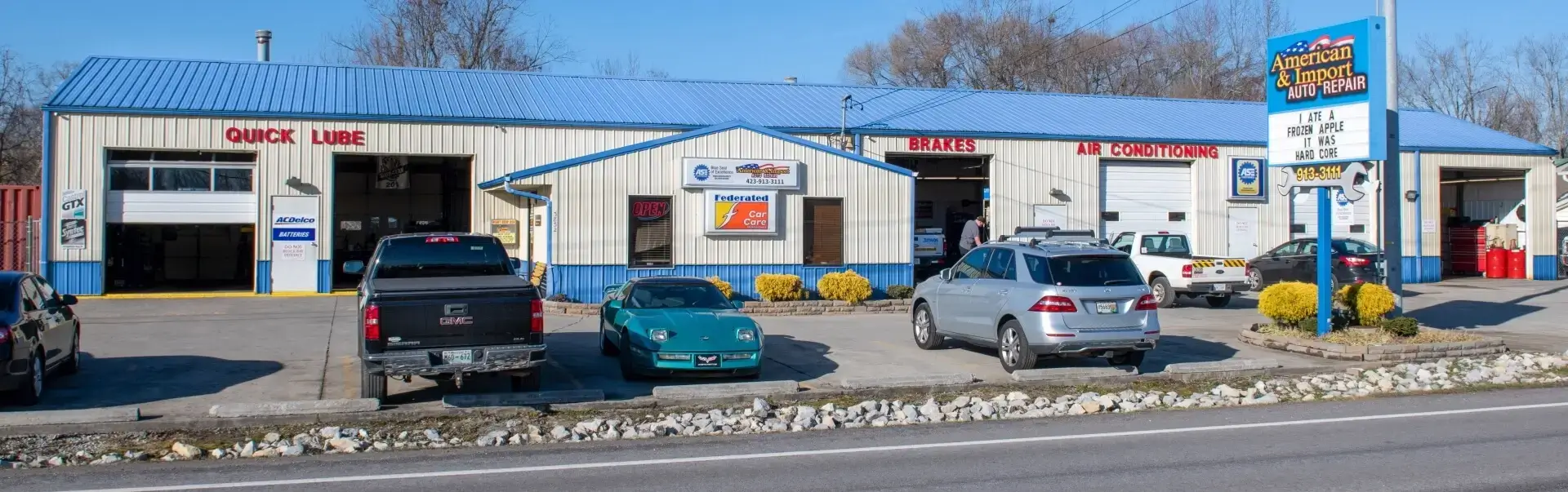
Learn more about American & Import Auto Repair.
C
Cynthia Front Desk
Cynthia helps run the front desk at American & Import Auto Repair, making sure customers stay informed and taken care of from drop-off to pickup.